Real Life Scenario that happened to Ms Low, (Straits Times Feb 4 2019)

A sudden stroke a few years ago saw one of her relatives being rushed to the intensive care unit, where he lapsed into a coma.

Had he had an LPA before losing mental capacity, access to his insurance funds and other assets would have been relatively simple.
Instead, his family was embroiled in a long and tedious process of appointing a deputy to access his assets — costing them thousands of dollars in legal fees.
Darren Tan PT Estate Planning Pte Ltd will writing singapore trust planning singapore lasting power of attorney lpa singapore lasting power of attorney-01

In short, an LPA is an important and convenient legal tool that allows you, the donor, to appoint a trusted person (or several) as donee(s) to act and make decisions on your behalf, in the event that you lose mental capacity.

Without an LPA, this process immediately becomes more difficult. Most may
mistakenly believe that family members are automatically granted the right to make legal decisions on your behalf — but this is not the case.

Family members who are not appointed donees will likely face difficulties trying to make care arrangements, as well as manage bank accounts and properties.
They will have to apply to court to be legally appointed as your deputy, before they are allowed to make decisions and act on your behalf.

But the deputyship application process takes much more time than the LPA application process, and will incur significant legal fees — both valuable resources that could be better spent on your care.

logo-office of the public guardian-01

Donees can act in two areas: (i) personal welfare and (ii) property and affairs. These two areas generally encompass making care arrangements and managing monies.

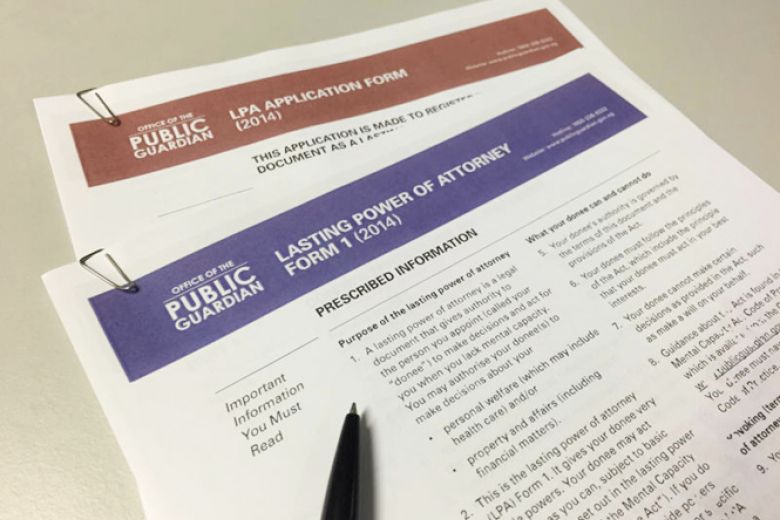
LPAs come in two forms: Form 1 and Form 2. Form 1 is the standard version that allows donors to grant general powers with basic restrictions to their appointed donees. Form 2 is more specialised, and is for donors who wish to grant customised and specific powers to their donees.

Use Form 1 if you wish to:

  • Have up to 2 (two) donees and one replacement donee
  • Give up your donee(s) generally wide powers and not get a lawyer
  • Restrict your donee(s) in making decisions for one property

User Form 2 if you wish to:

  • Have more than 2 (two) donees and more than one replacement donee
  • Limit powers given to donee(s) and get a lawyer to fill in these requirements
  • Restrict your donee(s) in making decisions for more than one property
If you happen to lose mental capacity at any point, an LPA will allow your assets to be unlocked for your care, and handled by a trusted proxy decision maker of your choice.
The number of LPA applications has risen in recent years, but the majority of Singaporeans still have no contingencies, should they lose their mental facilities.
“Many people tend to think that they won’t lose their mental facilities for a long time,” says Ms Chia Yong Yong, owner of Chia Yong Yong Law Corporation and former Nominated Member of Parliament. “That’s why there’s no urgency on their part to do up an LPA.”

As one of Singapore’s 1st cohort of graduates in STEP® certificate for Financial Services (Trust and Estate Planning Singapore), Darren Tan belongs to a selected group of Estate Planning specialist whom are professionally trained and qualified to help clients with Legacy Planning solutions (be it for business or family purposes).

Having spoken in many SMEs and MNCs, he is comfortable with helping audiences change their mis-conceptions or myths about Estate Planning. In addition, he is a strong advocate of the Lasting Power of Attorney.

With more than 10 years of experience, he has helped drafted more than 250 wills and set up more than 30 trusts.

I provide a complimentary 1st time assessment to determine if you are at risk /the necessity for LPA/ Wills/ Trusts.

If you are an asset owner (be it insurance/investments/ properties), please don’t delay having this discussion with me.